
India’s Spice Board data shows total spice exports of approximately $4.46 billion in 2023–24, making India the world’s largest spice exporter by value for the eleventh consecutive year. But the composition of this export basket is undergoing a structural shift that has significant implications for buyers evaluating their sourcing strategy.
The Value-Addition Shift
Whole spice exports — the traditional commodity form — are growing in volume but declining as a share of total export value. Value-added products are growing faster: oleoresin extracts, steam-sterilised spice powders, organic certified product, and proprietary spice blends are all taking a larger share of the export basket. This shift reflects both supply-side investment in processing capability and demand-side pressure from buyers seeking ready-to-incorporate ingredients.
Pepper, Chilli, and Cumin: The Volume Leaders
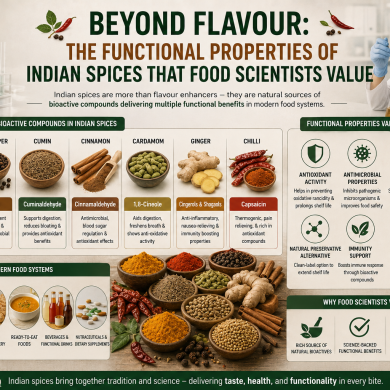
Black pepper, red chilli (and its derivatives — powder, oleoresin, extract), and cumin collectively represent approximately 45–50% of India’s total spice export value. Turmeric has seen the strongest growth rate over the past three years, driven by the functional food and nutraceutical demand described in our companion article on bioactive compounds.
Markets in Transition
The USA has consolidated as India’s largest spice export destination. Vietnam — a significant competitor in pepper — has also become a growing market for Indian value-added spice products. China’s demand for Indian spices (particularly cassia substitutes and certain oleoresins) has grown unexpectedly, creating a new destination segment that Indian exporters are actively developing.
The Ethylene Oxide Legacy: EU Market Recovery
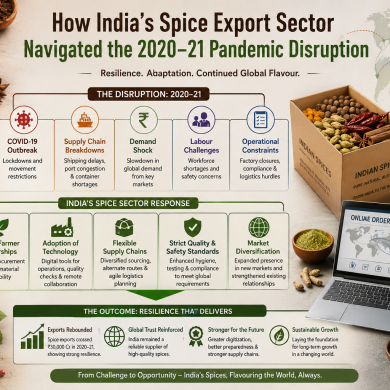
Following the 2020–2021 series of EU border rejections of Indian spice shipments for ethylene oxide residues, the sector has invested substantially in compliant processing and pre-export testing. EU import rejection rates for Indian spices have declined, and market share recovery is underway — though the reputational and structural changes prompted by the episode continue to influence buyer specification practices and supplier qualification requirements.
Add comment